
Buyer's guide
Channel Letters, Monument, Pylon, or Panel Sign? How to Choose an Exterior Business Sign
The right exterior sign depends on where your customers see you from, your building, your budget, and local sign rules. Here is how the four most common types compare.
By the CorPro Visual team · Updated · 9 min read
The short answer
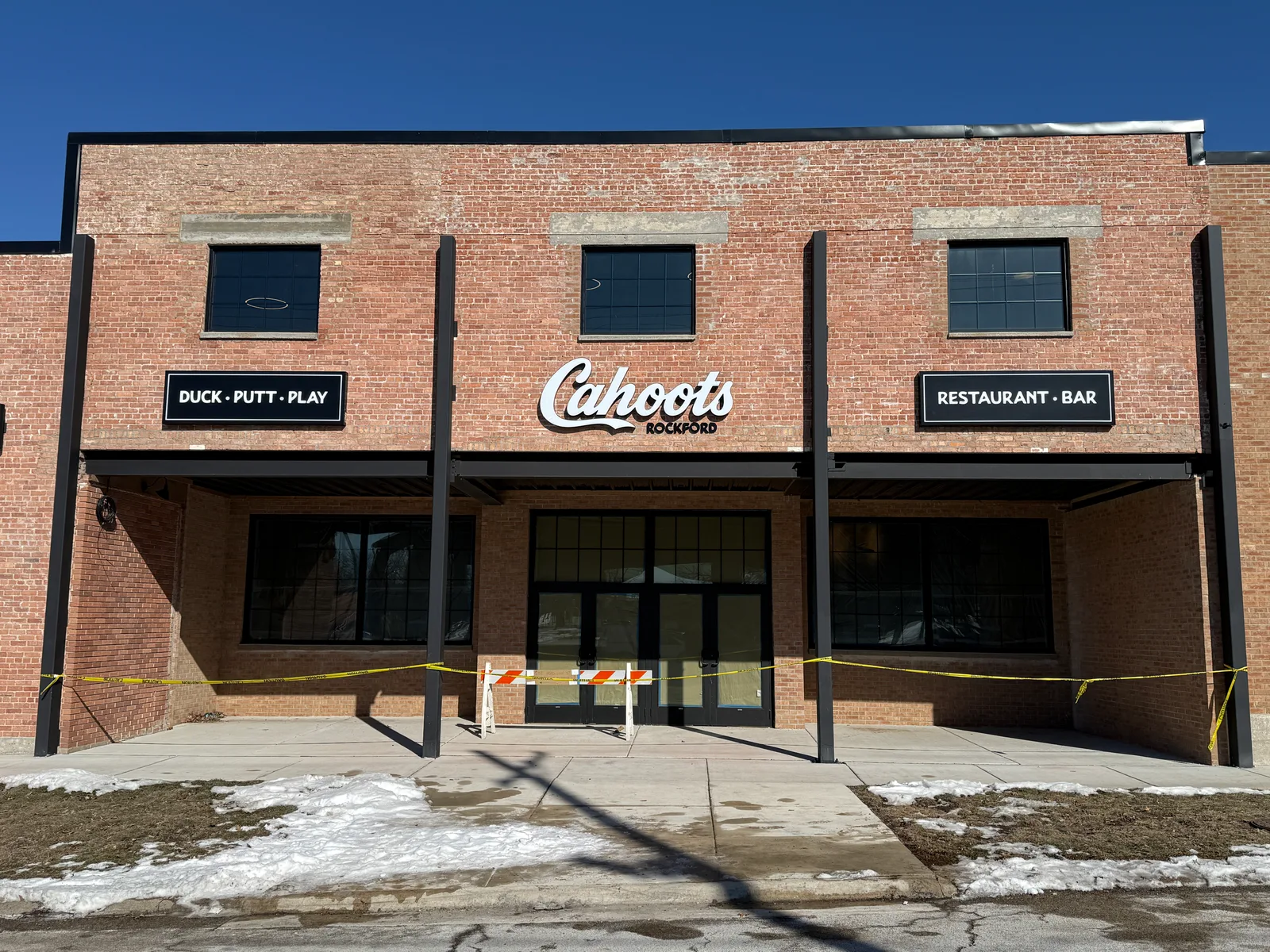
- Channel letters suit storefronts and buildings that face a street or parking lot; they are mounted on the building and are usually illuminated.
- Monument signs sit low near the entrance or road and work well for campuses, churches, schools, and businesses set back from the street.
- Pylon signs are tall, pole-mounted signs for high-speed roads and multi-tenant centers where visibility from a distance matters most.
- Panel signs (ACM, aluminum, PVC, or acrylic) are the most budget-friendly option for suite IDs, storefronts, and post-and-panel entrance signs.
- As starting points in our estimator: panel signs from about $26–$52 per sq ft, channel letters from about $475 per 12-inch letter, monument signs from $8,500, and pylon signs from $15,000.
Start with how customers find you
Before choosing a style, picture the moment a customer first looks for your business. Are they walking past a storefront, driving through a parking lot at 25 mph, or passing at 55 mph on a highway? Are you the only business on the lot, or one of a dozen tenants? Those answers narrow the choice faster than anything else.
A sign also has to work with the building. A historic brick facade, a glass storefront, a metal-panel warehouse, and a landscaped entrance each favor different mounting methods. On a site visit we look at sight lines, mounting surfaces, electrical access, and setbacks so the recommendation fits the property — not just the logo.
Channel letters: the classic storefront sign
Channel letters are individually fabricated letters and logo shapes mounted to the building — either directly to the wall or on a raceway (a slim box that holds the wiring). They are usually LED-illuminated: front-lit (the face glows), halo-lit (light washes the wall behind the letter), or a combination.
They are the right choice when your building faces the street or parking lot and you want a polished, branded look that reads well day and night. Because each letter is built to your font and logo, they are also among the most brand-accurate exterior signs.
Cost is driven mainly by the number and height of letters and the lighting style. As a starting point, our estimator uses about $475 per letter up to 12 inches tall, plus about $35 for each additional inch of height, before installation. Illuminated signs also need an electrical connection at the wall.
Non-illuminated dimensional letters — cut acrylic, PVC, or metal — are a lower-cost alternative with a similar look during the day. They are common for building identification on schools, municipal buildings, and offices.
Monument signs: low, solid, and permanent
Monument signs are ground-mounted signs, usually on a brick, stone, or masonry-look base, placed near an entrance or along the road. They signal permanence and work especially well for schools, churches, healthcare campuses, office parks, and any business set back from the street.
Many monument signs include an LED message center for announcements, events, or promotions. Cabinets can be illuminated, and the base can be designed to match the building's materials and landscaping.
Monument signs are a larger investment because they involve design, a foundation, fabrication, and often electrical work. In our estimator they start at $8,500, and every monument project is reviewed by our team before we quote a final number.
Pylon signs: visibility from the road
Pylon signs are tall, pole- or column-mounted signs designed to be seen from a distance — along highways and busy arterial roads, at gas stations and restaurants, and at shopping centers that need to list several tenants on one structure.
They often combine a branded top cabinet, replaceable tenant panels, and an LED message center. Because they are tall structures, they require engineered footings, heavier equipment to install, and careful attention to local height and setback rules.
Pylon signs start at $15,000 in our estimator and are always reviewed by our team. If you are a tenant in an existing center, ask whether you only need a new panel for an existing pylon — that is a far smaller project.
Panel signs: the budget-friendly workhorse
A panel sign is a flat, rigid sign with printed or applied graphics. The most common materials are aluminum composite (ACM, often called Dibond), solid aluminum, PVC, and acrylic. Panel signs can be mounted flush to a wall or storefront, set on stand-offs, or installed on posts as a post-and-panel entrance sign.
They are ideal for suite and tenant IDs, smaller storefronts, directories, and temporary or phased signage. As starting points, our estimator uses about $26 per sq ft for PVC, $34 for ACM, $44 for aluminum, and $52 for acrylic, plus a $150 fabrication base and about $450 for a post mount.
A refreshed panel can also give new life to an existing sign structure. When Summit Restoration needed a new sign, we refinished the existing post-and-panel frame and installed new faces — see the before and after on our portfolio.
Permits, landlords, and timelines
Most permanent exterior signs need a sign permit, and many commercial properties also require landlord approval. Rules on size, height, lighting, and setbacks vary by city and zoning district, so the same sign can be allowed in one town and not the next. We handle code-compliant fabrication and coordinate the permitting and installation process as part of exterior projects.
Build the approval step into your schedule. Printed panel signs can be produced quickly once artwork is approved, while fabricated channel letters, monument signs, and pylons take longer — especially when a permit review or foundation is involved. We give you a timeline with your quote.
Lighting: is an illuminated sign worth it?
If customers find you in the evening, during Midwest winters when it is dark by late afternoon, or from a busy road, illumination usually pays for itself in visibility. Modern LED lighting is energy-efficient and long-lasting compared with older neon and fluorescent signs.
If you are open only during daylight hours or the sign is mainly for identification, non-illuminated dimensional letters or a panel sign can deliver a clean look for less.
Quick comparison
Channel letters — best for storefronts facing a street or lot; usually illuminated; mid-range cost.
Monument sign — best for entrances, campuses, and set-back buildings; often includes an LED message center; higher cost.
Pylon sign — best for highway and multi-tenant visibility; tallest and most engineered; highest cost.
Panel sign — best for suites, small storefronts, directories, and refreshes; most budget-friendly.
Still not sure? Upload a photo of your building to the AI Visualizer to preview options, or get a working range with the instant estimate.
Frequently asked questions
- What is the difference between channel letters and dimensional letters?
- Channel letters are fabricated, usually hollow letters that are typically illuminated with LEDs. Dimensional letters are solid cut letters (acrylic, PVC, or metal) and are usually not illuminated. Both mount directly to the building.
- How much does a monument sign cost?
- It depends on size, base materials, lighting, and whether an LED message center is included. CorPro's estimator starts monument signs at $8,500, and every monument project is reviewed by our team before final pricing.
- Do I need a permit for a business sign?
- Most permanent exterior signs require a permit, and rules vary by city and zoning district. CorPro coordinates permitting and code-compliant fabrication for exterior projects.
- What is the cheapest type of exterior business sign?
- A printed panel sign (PVC or aluminum composite) is usually the most budget-friendly permanent exterior sign. Non-illuminated dimensional letters are a step up in appearance at a moderate cost.
Prices are starting points from CorPro Visual's online estimator and are provided for planning only. Every project is confirmed by our team after reviewing size, materials, site conditions, and installation.